

Introduction

The Petroleum & Gas Engineering Program was started in 2015 in the Coal Research Building Block of NFC-IET. In 2019, the extension of the building was completed and the Petroleum & Gas Engineering program got the building with sufficient space having 2 floors. At present six batches of the Petroleum & Gas Engineering Department are in the market while three batches are in progress. Petroleum & Gas Engineering Department has at present 2 Ph.D. Faculty Member (Assistant Professor) and 5 MS Degree Holders. The department is equipped with state of art dedicated Petroleum & Gas Engineering laboratories. The library is stuffed with over 2500 volumes of books. 

Apart from merit scholarships, the department is offered with numerous scholarships from the Local Industry, District Government, Honhaar and Ehsas scholarship through University’s Financial Aid & Career Services Office. Majority of students get support from these scholarships.

The faculty’s research interests encompass reservoir engineering, production engineering, drilling engineering, enhanced oil recovery, well testing, and reservoir simulation. The department is actively developing an integrated program aimed at providing professional courses and consultancy services to the industry. Additionally, students undertake extensive research projects addressing real-world industrial challenges as part of their final-year requirements.

Graduates from this department secure well-paying positions in both operating and oilfield service companies within the petroleum sector, locally and internationally. Many of our alumni are successfully employed across the globe, including in regions such as the Middle East, Europe, North America, and Africa.

Mission

The mission is to produce qualified and well-versed Petroleum Engineers equipped with fundamental sciences, able to find viable solutions, and skills to enter executive technical positions in energy and public sector industry and organizations, R & D Institutes, and academia.
Message from HoD

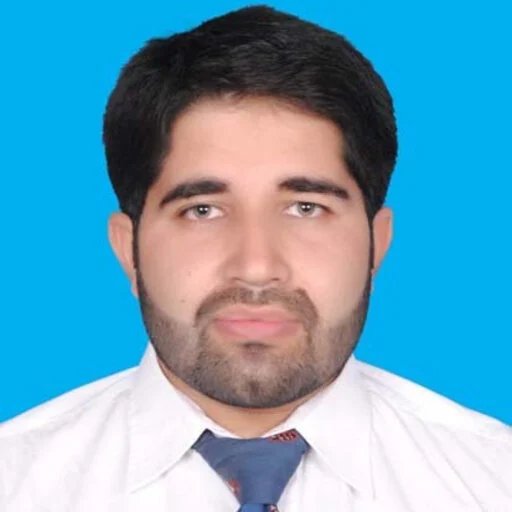
HOD

Engr. Dr. Sheraz Ahmad

A key source of energy is oil and natural gas. The efficient recovery of these resources requires Petroleum Engineers with a sound knowledge of fundamentals and the latest technological developments relevant to this field. Upstream petroleum engineers are always in demand. Petroleum Engineering involves the production of oil and gas (hydrocarbons) from subsurface reservoirs which requires engineering to bring it to the surface, estimate its value and extract it, in other words, finding oil and gas, drilling and producing it. The mission of the Petroleum Engineering education is to produce graduates who can not only satisfy the current needs of the country’s petroleum industry but are also able to develop technologies indigenously. Preparing effective and efficient professionals through research and to develop the methods to utilize all the available natural resources in order to fulfill the energy needs of Pakistan in coming years. This will contribute to the socio-economic development of Pakistan and the region.

I welcome you to the Department of Petroleum Engineering that offers BSc Degrees in Petroleum Engineering. The department has ample number of qualified faculty members trained to deliver knowledge skillfully by teaching a variety of Petroleum engineering subjects in range and depth. In addition to having relevant higher qualification in the area, our faculty have acquired top skills and industrial experience both locally, and from abroad.

Program Offered

  • B.Sc. Petroleum And Gas Engineering

Laboratories & Facilities

Laboratories

Department has recently equipped following state of the art labs with modern equipment

  • Drilling Engineering
  • Petroleum Geology
  • Petrophysics
  • Reservoir Simulation
  • Properties of Reservoir Fluid
  • Computer Programming/Simulation Lab

Facilities

Petroleum & Gas Engineering department is a purpose-built building that offers ample space for laboratories, training rooms, spacious class rooms, meeting and discussions rooms, video conference rooms, and faculty offices.

Facilities in the labs are for better learning and to prepared them to fulfill the future job requirements. Following facilities are available in our lab:

  • Advance Coal Research Center       
  • Latest Computers
  • Air conditioned classrooms
  • Access of Free Wifi
  • Highly Equipped computers for specialized applications
  • Research clusters

Program Objectives

Program Educational Objectives (PEOs)

The program emphasizes building a strong base in Petroleum Engineering discipline and a detailed understanding of core areas with practical knowledge that comprehended with the use of professional software and laboratory practices. The program is competent to enhance capabilities for higher education and to fulfill the requirements of the petroleum industry. It is also oriented towards the Outcome-Based Education (OBE). The main objectives are to develop:

  • PEO1-To develop Petroleum engineers with comprehensive engineering and scientific knowledge and technical skills to solve complex engineering problems.
  • PEO2-To develop critical thinking in graduates so that they can identify, analyze, solve, and design new problems using modern tools and simulation techniques.
  • PEO3-To develop a sense of responsibility, effective communication skills, and the ability to work independently as well in a team.
  • PEO4-To develop ethical values, management qualities, and innovative ideas that can promote sustainable development among graduates to continue life-long learning to meet future challenges.

Program Learning Outcomes (PLOs) / Graduate Attribute Profiles (GAs)

  1. Engineering Knowledge: Apply knowledge of mathematics, natural science, engineering fundamentals and Engineering specialization to the solution of complex engineering problems.
  2. Problem Analysis: Identify, formulate, conduct research literature, and analyze complex engineering problems reaching substantiated conclusions using first principles of mathematics, natural sciences and engineering sciences.
  3. Design/Development of Solutions: An ability to design solutions for complex engineering problems and design systems, components or processes that meet specified needs with appropriate consideration for public health and safety, cultural, societal, and environmental considerations.
  4. Investigation: Conduct investigation of complex Engineering problems using research-based knowledge and research methods, including design of experiments, analysis and interpretation of data, and synthesis of information to provide valid conclusions.
  5. Tool Usage: Create, select and apply appropriate techniques, resources, and modem engineering and IT tools, including prediction and modeling, to complex engineering problems, with an understanding of the limitations
  6. The Engineer and the World: Analyze and evaluate sustainable development impacts to society, the economy, sustainability, health and safety, legal frameworks, and the environment while solving complex engineering problems.
  7. Ethics: Apply ethical principles and commit to professional ethics and norms of engineering practice and adhere to relevant national and international laws. Demonstrate an understanding of the need for diversity and inclusion.
  8. IndividuaI and Collaborative Team Work: Function effectively as an individual, and as a member or leader in diverse and inclusive teams and in-multi disciplinary, face-to face, remote and distributed settings.
  9. Communication: Communicate effectively and inclusively on complex engineering activities with the engineering community and with society at large, such as being able to comprehend and write effective reports and design documentation, and make effective presentations, taking into account cultural, language, and teaming differences.
  10. Project Management and Finance: Demonstrate knowledge and understanding of engineering management principles and economic decision making and apply these to one’s own work, as a member and leader in a team, to manage projects in multidisciplinary environments.
  11. Lifelong Learning: Recognize the need for, and have the preparation and ability for i) independent and lifelong learning ii) adaptability to new and emerging technologies and iii) critical thinking in the broadest context of technological change.

Industry Collaboration

Success in any modern profession relies on strong integration and collaboration among its various components. Therefore, it is essential for academic institutions to maintain active coordination with relevant industries — a principle well-practiced by the Department of Petroleum and Gas Engineering. Despite the petroleum industry of Pakistan being primarily centered in Karachi and Islamabad, the department has effectively established productive industry linkages. Moreover, all students are offered summer internship opportunities once during their degree program. These internships are supported by both national and multinational companies within the local petroleum industry.

OBE System

Petroleum & Gas Engineering Department started working on outcome-based education (OBE) as per requirements of the Pakistan Engineering Council and to train faculty and staff, several training sessions have been organized. The Petroleum & Gas Engineering Department is continuously improving under the light of the PEC Guidelines.

Faculty Members

Faculty at NFC-IET have impeccable qualifications, extensive expertise and experience in their chosen fields and an overriding commitment to the welfare of their students. Our faculty is one of the biggest reasons why students select NFC-IET.

Navigation Menu