

Introduction

Multan is a showcase for recent regeneration as well as rich historic context. Its history and age are characterized by the various names, rulers, invasions, cultures and religions, which span over a period of three thousand years. From the pre-Islamic era to modern times, culture of Multan has always been rich with literary and academic knowledge, which has caused it to be the center of learning throughout its history. The city recognizes the value of high-quality design, together with innovative and pragmatic approaches to resolving practical issues.

The Bachelor’s degree of Architecture at NFC-IET Multan, introduces the various sub fields for architects. The scope of the program is broad.  In five years,students will learn all the basic skills and techniques combining theory and design with latest technological advances. Students’s own creativity and spatial insight play a major reole in this. Various design projects, both individually and in groups, will help them to learn about the way technology, culture and the living environment interact with each other. Students will develop analytical and creativity skills along-with spatial aptitude and will benefit from the practical expertise of specialists alongside research-active lectures, who provide a rich and stimulating environment in which to study architecture. We combine traditional lecture-based teaching with workshop and design studio sessions.

Project learning is the basis of architecture education, and the studio is where this learning takes place. B. Architecture graduates are highly valued for their confidence and creativity, and benefit from our strong links with national and international architectural practices.
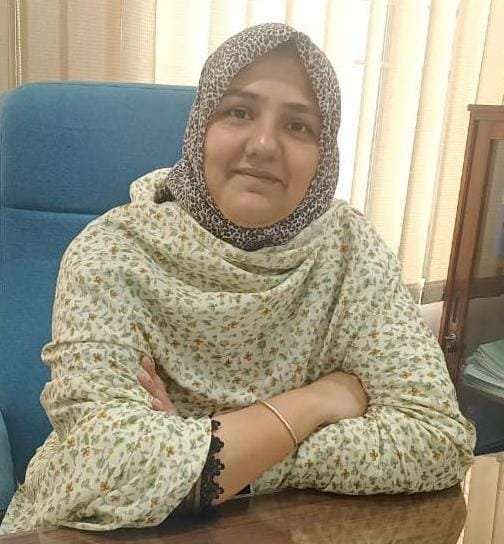
Message from HoD

Ar. Syeda Mahwish Zahra

Architecture is not merely about structures, it’s about shaping experiences, emotions, and the future. We cultivate minds that think beyond boundaries, merging art, technology, and sustainability into meaningful design. Our vision is to empower students to become creators of environments that inspire, connect, and endure. Together, we design not just buildings but better worlds. We aim to equip students with the skills to design spaces that respond to human needs, cultural values, and environmental challenges. Through a blend of theory, technology, and design exploration, we nurture the architects of tomorrow.

Eligibility Criteria

  • Intermediate FA, FSC and DAE (Architecture) with 60% aggregate marks.
  • Minimum 60% Marks in departmental aptitude test.
  • (DAT), interview and drawing test. Candidates are also advised to bring in their drawing portfolio at the time test & interview.
  • Portfolio: Student must showcase skills, mandatory for Architecture candidates.

Laboratories & Facilities

Laboratories

Computer Graphics Lab: The computer graphics lab is located in Department of Architecture. The facility has a total capacity of 50 students and is the best equipped in the NFC-IET. The lab is used for many training programs conducted for students. The computers are fully optimized to run latest versions of drafting, rendering, image & video editing software. Lab is further supplemented by the following equipments such as plotter, multimedia podium rostrum, sound system, internet facility.

Facilities

Departmental Library: Departmental library is equipped with architectural books, national and international magazines and journals. The modern collection is superbly stocked and it is kept up to date with regular purchases. We aim to support undergraduate-level study in all the principal subjects studied by NFC-IET under graduates.

Events

event-image Nov 28, 1982
test4, News

Nihil sint adipisici

Super Admin
event-image Dec 02, 2025
event-image Sep 15, 1982
Uncategorized, Blog

Deserunt reprehender

Super Admin

Program Objectives

Program Educational Objectives (PEOs)

The Bachelor of Architecture (B. Arch) has the following five Program Educational Objectives PEOs. These objectives shall be measured after the completion of one cycle of five years through indirect assessment and subsequently to proceed for Continuous Quality Improvement Process (CQI).

PEO-1: Graduates demonstrate their ability to apply architectural knowledge (history, theories of architecture / related art, culture, environment, social science, urbanism, and technology) in preparing design proposals and solving complex architectural design problems.

PEO-2: Graduates exhibit an adequate knowledge of building construction, building systems (structure, mechanical, electrical), and services in architectural planning.

PEO-3: Graduates demonstrate an adequate level of effective communication through interpersonal skills, leadership, teamwork, self-management, digital and design tools.

PEO-4: Graduates demonstrate the ability to investigate, think critically, and analyze problems of diverse and complex nature.

PEO-5: Graduates participate actively in activities and processes related to professional practice, development, and life-long learning.

Program Learning Outcomes (PLOs)

The Bachelor of Architecture has the following eight Program Learning Outcomes (PLOs). The graduating students are supposed to display all these PLOs in their final year thesis project to an acceptable level determined by the program administration  

PLO-1: Architectural Knowledge
Ability to apply Architecture knowledge (history, theories of architecture / related art, culture, environment, social science, urbanism, and related technology) in the context of architectural design problems.

PLO-2:  Professional Skills 
Ability to comprehend the requirements of building users in depth and translate the same in architectural design efficiently with appropriate solutions for architectural, structural, and building construction associated problems.

PLO-3:  Critical Thinking
Ability to identify, investigate, analyze, and comparatively evaluate critical/complex architectural problems and suggest multiple viable design solutions.

PLO-4: Communication 
Ability to convey ideas and express rationale clearly in design through effective communication including but not limited to proposals, presentations, reports, multimedia, and digital tools.

PLO-5: Investigation
Ability to investigate complex architectural and related problems through various methods including literature review, case studies, surveys, simulations, experimental investigation, interpretation of data and synthesis of information leading to conclusions.

PLO-6: Leadership and Professional Ethics
Ability to inspire and motivate the team members with leadership skills including interaction, collaboration, negotiation, interpersonal skills and professional ethics for an effective working relationship/environment.

PLO-7: Lifelong Learning
Ability to acquire knowledge, professional skills, and information in the context of innovation and professional development through continuous efforts from diverse sources.

PLO-8:  Architect and Society
Ability to understand the role of an architect in societal and environmental contexts addressing contemporary issues through design solutions.

Career Paths

Architects can work in different public and private sectors. These career paths include.

  • Govt. Jobs
  • Private practice
  • Academia
  • Conservation
  • Writer
  • Photographer
  • Critic
  • Game Design
  • Visualization

Faculty Members

Faculty at NFC-IET have impeccable qualifications, extensive expertise and experience in their chosen fields and an overriding commitment to the welfare of their students. Our faculty is one of the biggest reasons why students select NFC-IET.

Navigation Menu